 |
|
 |




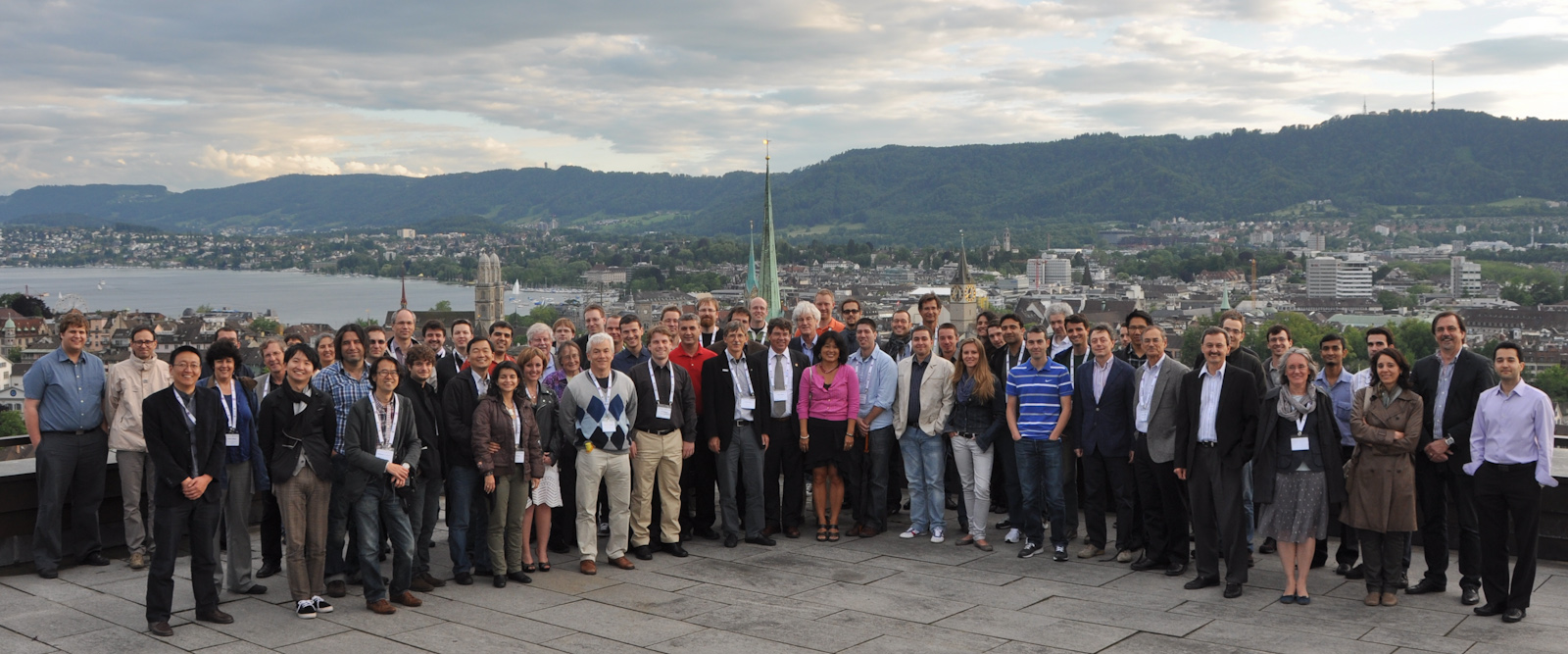
A Big Thank You to Martin Glinz, ICSE 2012 General Chair for hosting SEAMS 2012 in Zürich, Switzerland!
SEAMS 2012 ADVANCE PROGRAM (PDF)
SEAMS 2012 SPEAKER AND SESSION CHAIR GUIDELINES (PDF)
SEAMS 2012 Advance Program |
|
8:30 |
Registration and Breakfast |
9:00
|
Session 1: SEAMS 2012 Opening and Keynote Opening Remarks Keynote
|
10:10 |
Nutrition Break |
10:30
|
Session 2: Service-Based Systems Proactive Adaptation of Service Composition Dynamic Self-Adaptation for Distributed Service-Oriented Transactions OSIRIS-SR: A Safety Ring for Self-Healing Distributed Composite Service Execution Discussion |
11:50
|
Session 3: Exemplars Traffic Routing for Evaluating Self-Adaptation 3-Slide Exemplar Presentations Discussion |
12:45 |
Lunchon |
14:00
|
Session 4:
Control Theory and Resilience Survey on the Design of Self-Adaptive Software Systems using Control Engineering Approaches
Reliability-Driven Dynamic Binding via Feedback Control Javier Cámara, University of Coimbra, Portugaland Rogerio De Lemos, University of Kent, UK Discussion |
15:30 |
Nutrition Break |
15:30
|
Session 5:
Distributed Systems Coordination of Distributed Systems through Self-Organizing Group Topologies Timing Constraints for Runtime Adaptation in Real-time, Networked Embedded Systems A Middleware and Algorithms for Trust Caculation from Multiple Evidence Sources Report on 2012 SEfAS Book 2 Discussion |
17:30 |
|
|
19:45
|
SEAMS 2012 Dinner at ETH Dozentenfoyer |
SEAMS 2012 Advance Program |
|
8:30 |
Registration and Breakfast |
9:00 |
Session 6: Keynote
|
10:00 |
Nutrition Break |
10:30 |
Session 7:
Surveys and Taxonomies
|
12:00 |
Session 8: Fishbowl Panel
|
12:45 |
Lunchon |
14:00 |
Session 9: Models and Mediators
|
15:30 |
Nutrition Break |
16:00 |
Session 10: Requirements and Specifications
|
17:20 |
Session 11: Closing Session
|
|
|
Enjoy ICSE 2012 and Switzerland! |

Important Dates
|
SEAMS 2012 Call for Papers (pdf)
The increasing complexity, distribution, and dynamism of many software-intensive systems are imposing self-managing capabilities as a key requirement. These systems must be able to adapt themselves at run-time to cope with changes in the environment in which they operate, variability of resources, new user needs, intrusions, and faults. The goal is to preserve operation and react to changes with no (or limited) human intervention.Solutions to complement software systems with self-managing and self-adaptive capabilities have been proposed by researchers in many different areas, including software architecture, fault-tolerant computing, robotics, control systems, programming languages, run-time program analysis and verification, and biologically-inspired computing. This symposium focuses on the software engineering aspects, including the methods, techniques, and tools that can be used to support self-adaptive, self-managing, self-healing, self-optimizing, and self-configuring software systems.
The objective is to bring together researchers and practitioners from many of these diverse areas to investigate, discuss, and examine thoroughly the fundamental principles, state of the art, and critical challenges of self-adaptive and self-managing systems.
Topics of Interest
SEAMS is interested in submissions from both industry and academia on all topics related to self-adaptive and self-managing systems. Topics include, but are not limited to:
- requirements elicitation techniques for self-adaptation
- formal notations for modeling and analyzing self-adaptation
- programming language support for self-adaptation
- properties of self-adaptive systems
- reuse support for self-adaptive systems (e.g., patterns, designs, code)
- design and architectural support for self-adaptation
- feedback control for self-adaptive systems
- algorithms for self-adaptation
- integration mechanisms for self-adaptive systems
- self-repairing programs
- automated patch generation
- evaluation and assurance for self-* systems
- verification and validation of self-adaptive and self-managing software
- frameworks for analyzing self-adaptive and self-managing software
- testing of self-adaptive and self-managing systems
- decision-making strategies for self-adaptive and self-organizing systems
- methods for engineering user-trust of self-adaptive and self-managing systems
- model problems and exemplars
The following application areas are of particular interest:
- mobile applications
- cloud computing
- resource provisioning and optimization
- autonomic computing
- feedback control of computing systems
- problem determination including logging, analysis and diagnostics
- smart user interfaces
- service-oriented systems
- dependable computing
- autonomous robotics
Paper submission details
We solicit two types of papers: long papers (up to 10 pages) and position papers for new ideas (up to 6 pages). Long papers should either clearly describe the technical contribution and how the work has been validated, or describe how an existing technique has been applied to real-world examples. New idea papers provide an opportunity to describe novel and promising ideas and/or techniques that might not have been fully validated. All papers will be reviewed by at least three program committee members. Papers must not have been previously published or concurrently submitted elsewhere. The accepted papers will appear in the SEAMS 2012 proceedings published in the ACM and IEEE digital libraries.
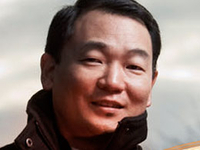
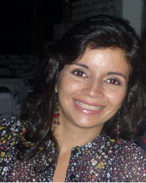
PC Chair
- Luciano Baresi, Politecnico di Milano, Italy
Program Committee
- Robert Baillargeon, General Motors, USA
- Nelly Bencomo, INRIA Paris - Rocquencourt, France
- Yuriy Brun, University of Washington, USA
- Marsha Chechik, University of Toronto, Canada
- Betty H.C. Cheng, Michigan State University, USA
- Shang-Wen Cheng, NASA JPL, USA
- Laurence Duchien, University of Lille 1-LIFL-INRIA, France
- Schahram Dustdar, Technical University of Vienna, Austria
- Gregor Engels, University of Paderborn, Germany
- Kurt Geihs, University of Kassel, Germany
- Carlo Ghezzi, Politecnico di Milano, Italy
- Ian Gorton, Pacific Northwest National Laboratory, USA
- Holger Giese, Hasso Plattner Institute Potsdam, Germany
- Shinichi Honiden, University of Tokyo, Japan
- Valérie Issarny, INRIA Paris - Rocquencourt, France
- Paola Inverardi, Università dell'Aquila Italy
- Gabor Karsai, Vanderbilt University, USA
- Marin Litoiu, York University, Canada
- Xiaoxing Ma, Nanjing University, China
- Jeff Magee, Imperial College London, UK
- Nenad Medvidovic, University of Southern California Los Angeles, USA
- John Mylopoulos, University of Trento, Italy
- Bashar Nuseibeh, Lero University of Limerick, Ireland
- Mauro Pezzè, University of Lugano, Switzerland
- Wilhelm Schäfer, University of Paderborn, Germany
- Ladan Tahvildari, University of Waterloo, Canada
- Thaís Vasconcelos Batista, Universidade Federal do Rio Grande do Norte, Brazil
- Danny Weyns, Linnaeus University, Sweden
- Andrea Zisman, City University London, UK
SEAMS Steering Committee
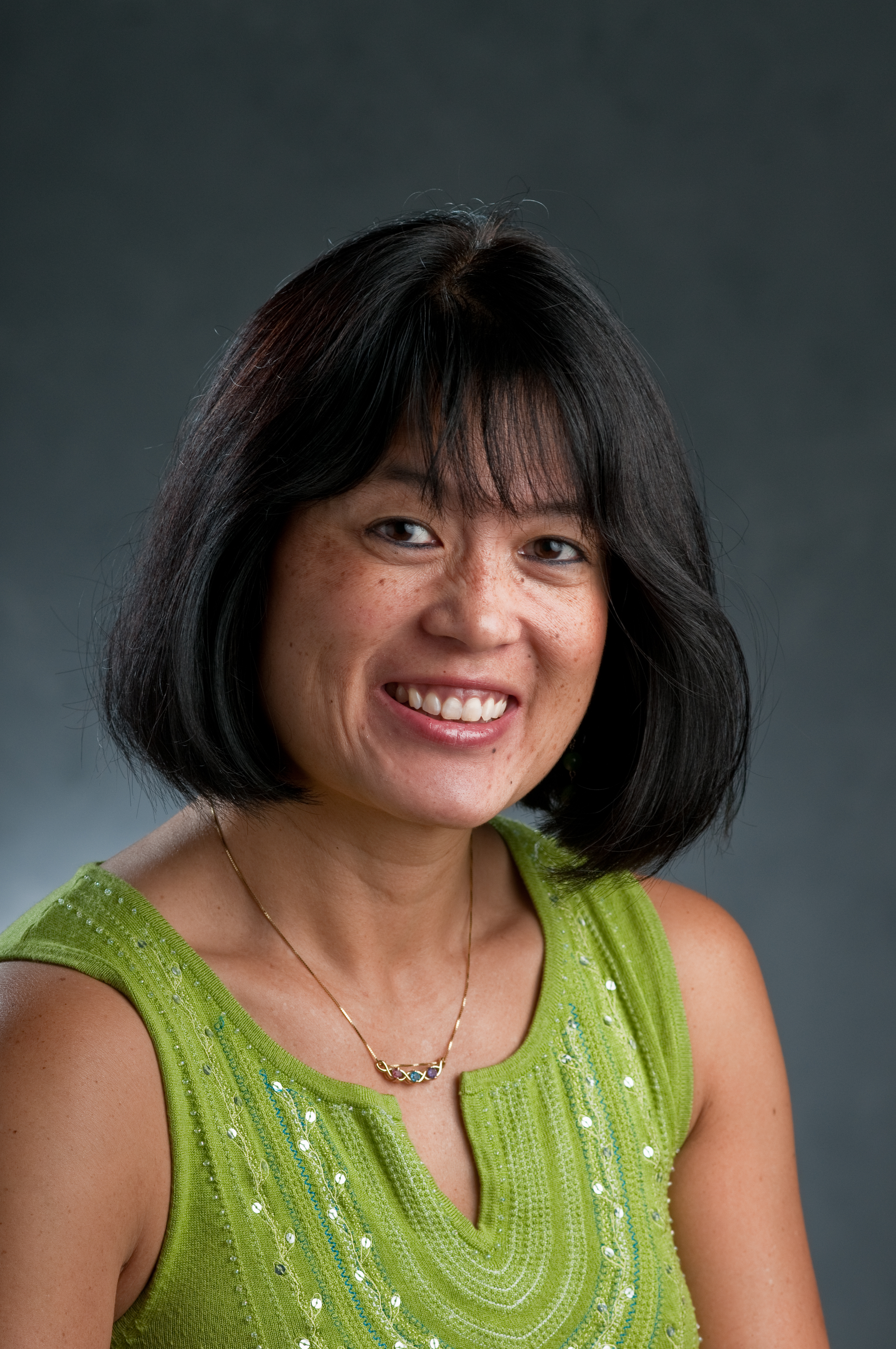 |
Dr. Betty H.C. Cheng, Michigan State University, USA
Betty H.C. Cheng is a Professor of Computer Science and Engineering at Michigan State University. Her research and teaching interests include formal methods for software engineering, component-based software development, object-oriented analysis and design, embedded systems development, dynamically-adaptive systems, visualization, and distributed computing. She was awarded a Faculty Fellowship from the California Institute of Technology and the NASA Jet Propulsion Laboratory in 1993 to apply newly developed requirements analysis and design techniques to a portion of the Shuttle software. In 1998, she spent her sabbatical working with the Motorola Software Labs investigating automated analysis techniques of specifications of telecommunication systems. Dr. Cheng is a co-founder of the Software Engineering and Network Systems Laboratory that currently supports 6 faculty members and their graduate students. Her research has been funded by NSF, DARPA, NASA, ONR, EPA, USDA, and numerous industrial organizations. She is Program Chair of SEAMS 2011. |
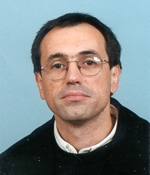 |
Dr. Rogério de Lemos, University of Kent, UK
Rogério de Lemos is a Lecturer in Computing Science at the University of Kent since 1999. During 2009, he was Invited Assistant Professor at the Department of Informatics Engineering, University of Coimbra, Portugal. Before joining Kent, he was a Senior Research Associate at the Centre for Software Reliability (CSR) at the University of Newcastle upon Tyne. His main research areas are in software architectures for dependable systems, and software engineering for self-adaptive software systems. He was General Chair of SEAMS 2010. |
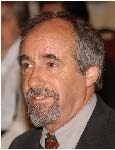 |
Dr. David Garlan, Carnegie Mellon University, USA
David Garlan is a Professor in the School of Computer Science at Carnegie Mellon University, where he leads several research projects and is the Director of Professional Software Engineering Programs. His research interests include: software architecture, pervasive computing, self-healing systems, applied formal methods, software development environments. |
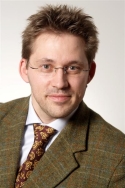 |
Dr. Holger Giese, University of Potsdam, Germany
Holger Giese heads the Systems Analysis and Modeling research group. The team focuses on model-driven software development for software-intensive systems. This includes the UML-based specification of flexible systems with samples and components, approaches to the formal verification of these models and approaches to the synthesis of models. The group also looks at the transformations of models, code generation concepts for structure and behavior for models and, in general, the problem of the integration of models in model-driven software development. He is General Chair of SEAMS 2011. |
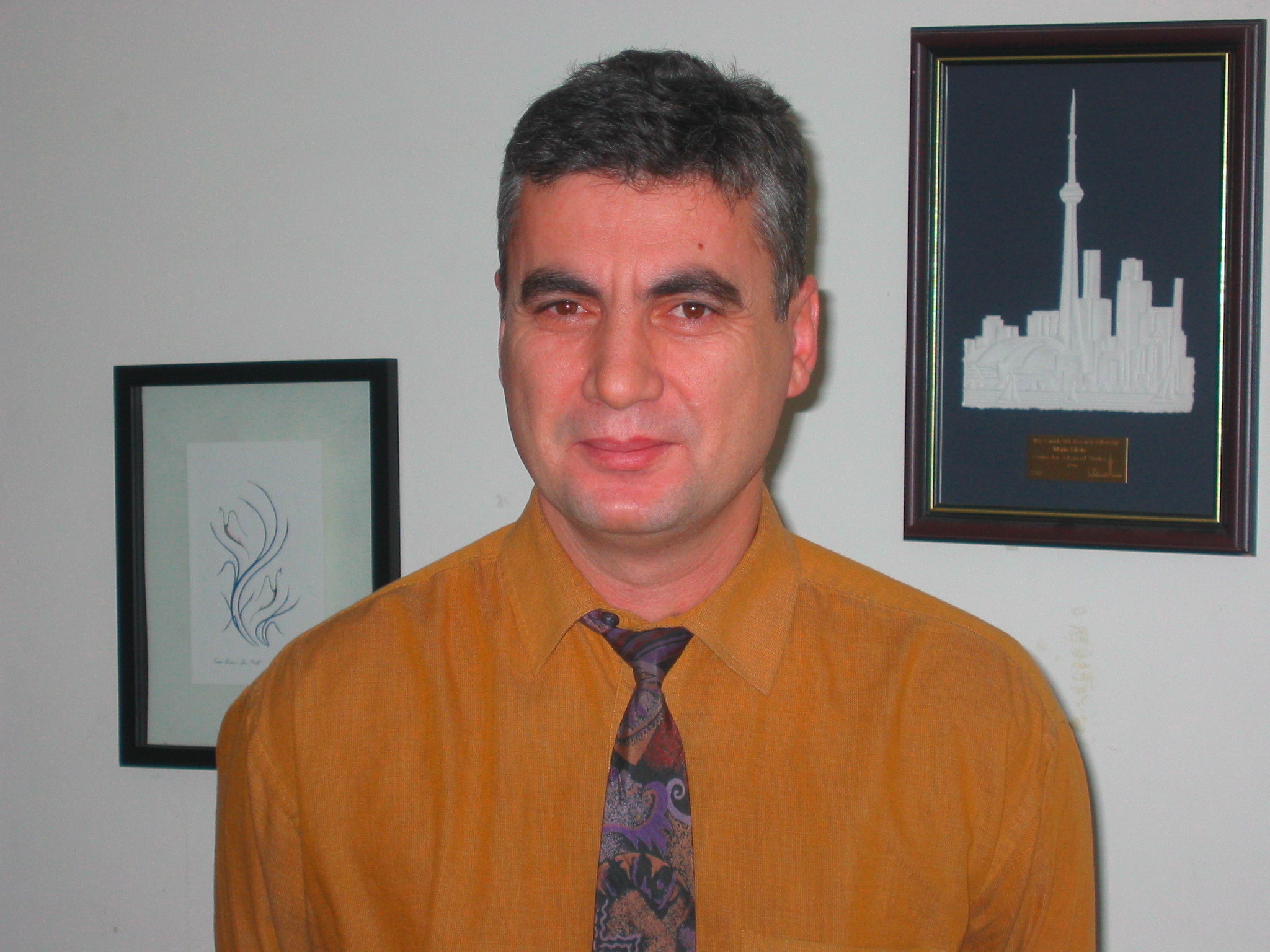 |
Dr. Marin Litoiu, York University, Canada
Marin Litoiu is an Associate Professor at York University in Toronto, Ontario, Canada. Until 2008 he was a member of the Center for Advanced Studies, IBM Toronto Laboratory where he led the research programs in Autonomic Computing, System Management and Software Engineering. He was also the Chair of the Board of CSER, a Canadian Consortium for Software Engineering Research. He was co-organizer of the ICSE workshops ACSE 2003, ACSE 2004, DEAS 2005, SEAMS 2007, and SEAMS 2008 and of the IBM CASCON Workshop Series on Engineering Autonomic Systems 2004-2008. Prior to joining IBM (1997), he was a faculty member with the Department of Computers and Control Systems, University Politechnica of Bucharest. Dr. Litoiu's other research interests include distributed objects; high performance software design; performance modeling, performance evaluation and capacity planning for distributed and real time systems. He was Program Chair of SEAMS 2008. |
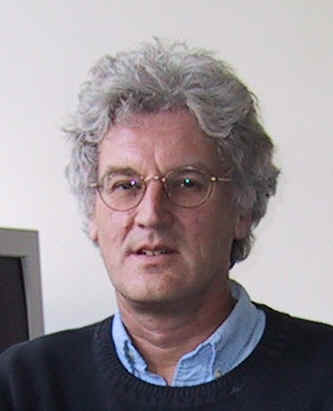 |
Dr. Jeff Magee, Imperial College London, UK
Jeff Magee is Head of the Department of Computing at Imperial College London. His research is primarily concerned with the software engineering of distributed systems, including design methods, analysis techniques, operating systems, languages and program support environments for these systems. His work on Software Architecture has lead to the commercial use by Phillips of the Architecture Description language Darwin in their next generation of consumer television products. He is the author of over 80 refereed conference and journal publications and has written a book on concurrent programming entitled “Concurrency - State models and Java programs.” He was co-editor of the IEE Proceedings on Software Engineering and is currently chair of the International Conference on Software Engineering Steering Committee. He is a Chartered Engineer and a member-at-large of the ACM SIGSOFT committee. He was awarded the BCS 1999 Brendan Murphy prize for the best paper in Distributed systems and the IEE Informatics Premium prize for 1998/99 for a paper on Software Architecture. He was Program Chair of SEAMS 2009. |
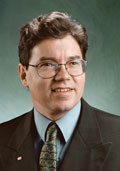 |
Dr. Hausi A. Müller, University of Victoria, Canada
Hausi A. Müller is Associate Dean Research, Faculty of Engineering and Professor in the Department of Computer Science at the University of Victoria, British Columbia, Canada. He was the founding Director of BSENG, a CEAB accredited Bachelor of Software Engineering degree program in the Faculty of Engineering. He is a Visiting Scientist at CAS, the Center for Advanced Studies at the IBM Toronto Laboratory and SEI, the Carnegie Mellon Software Engineering Institute. In 2006 he received the IBM CAS Faculty Fellow of the Year Award, the CSER Outstanding Leadership Award, and Stevens Citation for his many contributions to the software reverse engineering community. For over a decade he has been a principal investigator and Chair of the Technical Steering Committee of CSER, a Canadian Consortium for Software Engineering Research. Together with his research group and in collaboration with IBM Canada and CA Canada he investigates methods, models, architectures, and techniques for autonomic and self-adaptive systems, for application monitoring and diagnostics, and for service-oriented systems. He was GC for ICSE 2001 and IWPC-2003 and PC Chair for CASCON 2003. He was co-organizer of the ICSE workshops ACSE 2003, ACSE 2004, DEAS 2005 and SEAMS 2006. He serves on the Editorial Board of Software Maintenance and Evolution and Software Process: Improvement and Practice. He served on the Editorial Board of IEEE Transactions on Software Engineering (TSE) 1994-2000, 2005-2009). He is Chair of the IEEE Technical Council on Software Engineering (TCSE). He is General Chair of SEAMS 2012. |
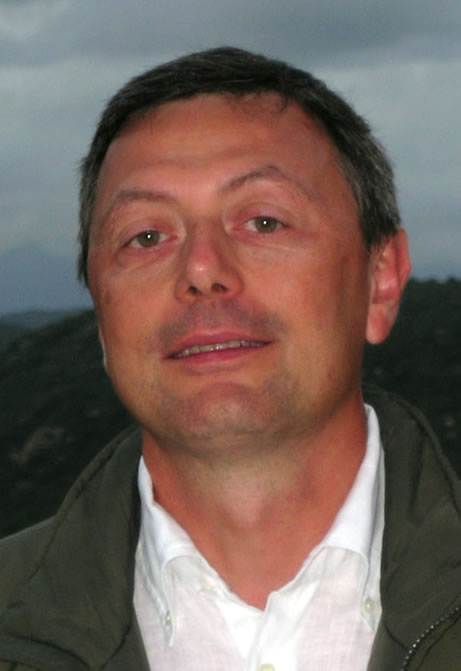 |
Dr. Mauro Pezzè, University of Milano Bicocca and University of Lugano
Mauro Pezzè is Professor of Software Engineering at the University of Milano Bicocca and visiting Professor of Software Engineering at the University of Lugano. Dr. Pezzè is serving as associate editor of ACM Transactions on Software Engineering, and has served as technical program chair of the 2006 ACM International Symposium on Software Testing and Analysis. He was Program Chair of SEAMS 2010. He has been technical lead for several multi-year international research and development projects in close collaboration with leading European information and communication companies. . |
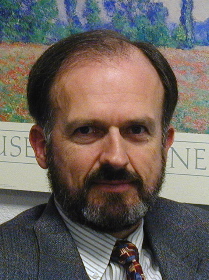 |
Dr. Richard N. Taylor, University of California at Irvine , USA
Richard N. Taylor is a Professor of Information and Computer Sciences at the University of California at Irvine and a member of the Department of Informatics (of which he was chair from its founding in January of 2003 through June, 2004). His research interests are centered on design and software architectures, especially event-based and peer-to-peer systems and the way they scale across organizational boundaries. Professor Taylor is the Director of the Institute for Software Research, which is dedicated to fostering innovative basic and applied research in software and information technologies through partnerships with industry and government. He has served as chairman of ACM's Special Interest Group on Software Engineering, SIGSOFT, chairman of the steering committee for the International Conference on Software Engineering, and was general chair of the 1999 International Joint Conference on Work Activities, Coordination, and Collaboration and the 2004 International Symposium on the Foundations of Software Engineering. He is the General Chair for the 2011 International Conference on Software Engineering, to be held in Honolulu, Hawaii, May 2011. |
SEAMS 2012 in Zürich, Switzerland
SEAMS 2010 in Cape Town, South Africa
SEAMS 2009 in Vancouver, British Columbia, Canada
SEAMS 2008 in Leipzig, Germany
SEAMS 2007 in Minneapolis, Minnesota, USA
DEAS 2005 in St. Louis, Missouri, USA
WOSS 2004 in Newport Beach, California, USA
WOSS 2002 in Charleston, South Carolina, USA
The SEAMS 2012 is a continuation of a number of successful symposia and workshops in the area of self-managing systems over the past decade. In 2011 SEAMS evolved from a workshop to a symposium. SEAMS 2006-11 were ICSE workshops. SEAMS was founded during the ICSE 2005 Workshop on Design and Evolution of Autonomic Application Software (DEAS). SEAMS grew out of the ICSE workshops DEAS and WADS (Workshop on Architecting Dependable Systems) as well as the FSE Workshops on Self-Healing Systems (WOSS). The goal of the SEAMS organizers was to consolidate interest in the ICSE and FSE communities on the software engineering aspects of autonomic, self-adaptive, self-managing, self-healing, self-optimizing and self-configuring. The SEAMS conference series will continue to discuss progress and challenges in this important area of software engineering.
There are several related conferences and workshops including IEEE International Conference on Autonomic Computing(ICAC); IEEE International Conference on Self-Adaptive and Self-Organizing Systems (SASO); Workshop on Architecting Dependable Systems (WADS); ACM International Conference on Autonomic Computing and Communication Systems (Autonomics); IBM CASCON Workshop Series on Engineering Autonomic Systems; and Dagstuhl SEFSAS workshops.
For more details please refer to the following websites:

ICSE 2012
The International Conference on Software Engineering (ICSE) is the premier software engineering conference, providing a forum for researchers, practitioners and educators to present and discuss the most recent innovations, trends, experiences and concerns in the field of software engineering.
The 34th ICSE conference will be held in the week of June 2-9, 2012 in beautiful Zürich, Switzerland.
Useful Swiss Websites
Swiss tourism: Travel, vacation, transportation, regions, ...
http://www.myswitzerland.com/en/home.html
Swiss portal: Train schedules, phone directory, ...
http://www.ch.ch/private/index.html
Politics, sports, travel, ...
http://www.swissinfo.ch/
People, culture, leisure, history, economy, ...
http://www.swissworld.com/
Wikitravel: Switzerland
http://wikitravel.org/en/Switzerland

Zürich, Switzerland
Zürich, the largest city in Switzerland, is located at the northwestern tip of Lake Zürich. While the municipality itself has approximately 380,500 inhabitants, the Zürich metropolitan area is an urbanised area with a population of nearly 2 million inhabitants. Zürich is a central European hub for railways, roads, and air traffic.
Zürich is one of the most livable cities and among the world's largest financial centres. Several surveys from 2006 to 2008, named Zürich the city with the best quality of life in the world. Zürich hosts many research and development centres because of low tax rates and because several surveys named Zürich the city with the best quality of life in the world.
City of Zürich
http://www.stadt-zuerich.ch/portal/en/index.html
University of Zürich
http://www.uzh.ch/index_en.html
ETH Zürich
http://www.ethz.ch/index_EN